
Notes on prop money dollars
- First published
- Last reviewed
- Oct 20, 2026
- Editor
- Sophie Lang
The allure of quick money can be strong, especially when opportunities like buying fake counterfeit money seem to promise an easy path to wealth. However, the reality of such schemes often leads to severe consequences. Understanding the risks involved with things like prop money dollars or even attempting to buy fake dollars is crucial, as the legal repercussions can be significant.
This guide breaks down a real-life case to illustrate the pitfalls of trying to use fake money dollar bills. It explores how a seemingly perfect plan to turn counterfeit $100 dollar bills into legitimate funds quickly unraveled, highlighting the advanced detection methods banks employ.
Even if you've seen prop money for sale nearby, it's important to recognize the distinct difference between prop money and actual counterfeit currency intended for illicit use. The following sections will detail the specific events that led to an individual's arrest, offering insights into how banks identify and flag suspicious transactions.
The Initial Plan: Acquiring and Depositing Counterfeit Currency
What was the initial strategy?
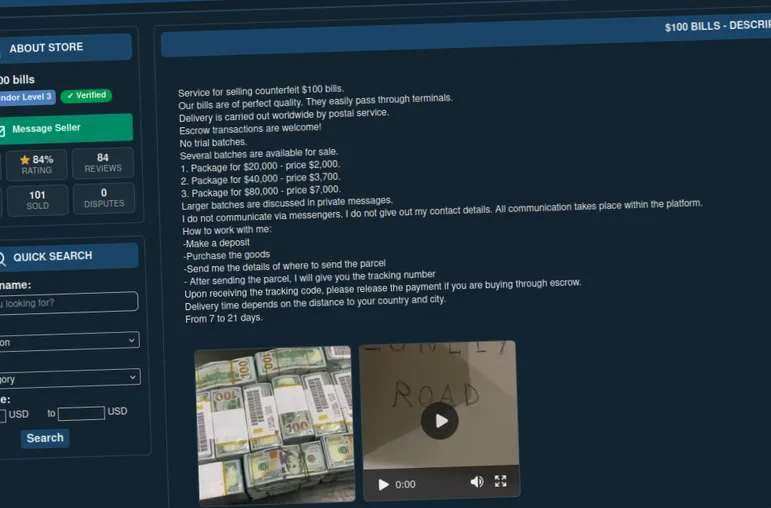
In 2025, a man named Derek H., aged 29 and residing in Denver, Colorado, thought he had found a reliable way to acquire real money. His strategy involved buying counterfeit currency from vendors on the dark web. He spent $1,200 in cryptocurrency to obtain 40 counterfeit $100 bills from the 2009 series.
The seller claimed these bills possessed "superdollar quality," indicating they closely mimicked genuine currency. The counterfeit notes were advertised as having features similar to real cash, including UV protection, a magnetic strip, and a watermark. Derek's plan was straightforward: he intended to deposit these fake bills into ATMs that accepted cash, expecting the machines to acknowledge the bills, credit his account, and allow him to withdraw or transfer these "digital" funds, effectively converting the counterfeit notes into actual cash.
Initially, his deposits were processed without issues, resulting in an $800 credit to Derek's account. However, complications emerged with subsequent transactions, leading to increased scrutiny from the bank.
The Unraveling: ATM Transactions and Bank Detection
The Unraveling: ATM Transactions and Bank Detection
What led to the failure of Derek's operation?
At first glance, Derek's undertaking seemed to hold potential. He engaged successfully with two ATMs that processed counterfeit $100 bills without any complications, allowing him to deposit a total of $800 into his bank account. This early success likely enhanced his belief in the quality of the counterfeit cash. Nevertheless, subsequent attempts revealed critical weaknesses in his approach.
When he attempted to use the third ATM, it rejected one of the bills, signaling a potential issue. This was the first indication that the so-called "superdollar quality" might not be as flawless as he had thought. The fourth ATM accepted one bill but marked the transaction as "pending review." This highlights an important aspect of banking security measures, suggesting that while the bill initially passed checks, certain elements of the transaction or the currency itself raised concerns that warranted further examination.
How Do Financial Institutions Identify Counterfeit Currency?
Financial institutions employ various strategies to detect counterfeit notes. These methods include:
Sophisticated Scanners: Modern ATMs and banking devices are fitted with advanced scanners that assess a multitude of security features beyond just UV light and magnetic strips. These attributes can include microprinting, security threads, color-shifting ink, and the quality of the paper utilized.
Monitoring Transactions: Banks closely observe unusual deposit patterns or large amounts from newly created or dormant accounts, particularly if cash is promptly withdrawn or transferred. A transaction labeled as "pending review" usually triggers a more thorough investigation by specialists.
Cross-Referencing Databases: Counterfeit notes frequently exhibit similar traits or serial numbers if they originate from the same source. Financial entities and law enforcement agencies maintain databases that catalog information on known counterfeit currency.
Three weeks after the transaction involving the fourth ATM, the consequences of Derek's actions became evident. He was apprehended by the U.S. Secret Service. This situation illustrates that even the most sophisticated counterfeit money, regardless of its source, can be identified by vigilant financial institutions and law enforcement. For those contemplating the acquisition of counterfeit $20 bills or investigating fake money websites, it is essential to understand the serious legal ramifications that may ensue. Although the price of counterfeit bills may appear low, the repercussions of being caught can be extremely severe. Ultimately, the website associated with the transaction served as a trap.
This purchase was made on a darknet marketplace, highlighting the hidden risks of such platforms.
The Consequences: Why the Bank Intervention Occurred
What was the result and what led to it?
After the suspicious transaction, the bank acted swiftly, freezing Derek's account the following morning. This decisive move shows that the situation was treated with urgency. Financial institutions are mandated to notify authorities about any dubious activities, particularly when they may involve money laundering or counterfeit currency. By freezing the account, the bank halts any potential movement of illegal funds and allows time for a detailed inquiry.
Derek's apprehension three weeks later underscores the seriousness of his actions. The U.S. Secret Service, which investigates counterfeit currency, was called in. Although there was a suggestion of sophistication in the counterfeit $20 bill, the banking system and law enforcement were not deceived. The intricate security measures present in authentic currency, combined with modern detection methods and vigilant oversight from banks, make it extremely challenging to circulate even high-quality fakes as legitimate currency.
The Dangers of Counterfeit Currency Schemes
The significant dangers of using counterfeit currency are often underestimated. The allure of inexpensive fake money, such as a 100 dollar fake bill, can be tempting. However, financial institutions and law enforcement have advanced systems in place to detect such frauds and initiate consequences.
Derek's experience illustrates the potential fallout, which can include everything from account freezes to arrests and federal charges. It is vital to recognize that any attempt to utilize counterfeit notes, even those that appear convincingly real, can lead to serious legal ramifications. The short-term benefits of trying to acquire counterfeit 20 dollar bills are far outweighed by the lasting effects of legal action and penalties.
FAQ
What is 'superdollar quality' in the context of fake money?
'Superdollar quality' refers to counterfeit currency that is highly sophisticated and designed to mimic genuine bills closely, often including features like working UV protection, magnetic strips, and watermarks. Despite these features, such fakes are still detectable by advanced bank security systems.
How did the bank detect the fake money?
The bank's ATMs flagged the transactions, with one returning a bill and another accepting it but marking the transaction as 'pending review.' This triggered an internal investigation that led to the account being frozen and ultimately involved the U.S. Secret Service.
What are the legal consequences of using counterfeit money?
Using counterfeit money is a federal crime in the United States, punishable by significant fines and imprisonment. Individuals caught can face charges from the U.S. Secret Service, which investigates such offenses.
Is prop money the same as counterfeit money?
No, prop money is specifically designed for use in films, theatrical productions, or training, and it typically has distinct markings to prevent it from being mistaken for real currency. Counterfeit money, on the other hand, is illegally produced with the intent to deceive and pass as genuine currency.