
The Rapid Unraveling of Mark T.'s Cloned Card Scheme
- First published
- Last reviewed
- Oct 20, 2026
- Editor
- Sophie Lang
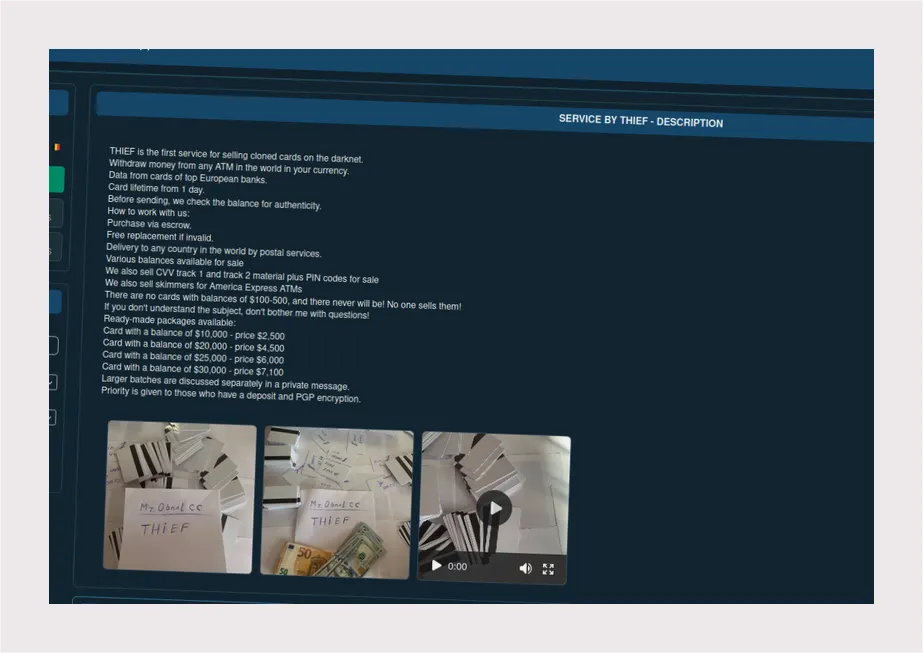
The dark web might appear to offer a veil of anonymity, but it can lead to serious legal issues when online actions intersect with real-world behaviors. This narrative demonstrates how a seemingly simple act of cashing out cloned debit cards can result in significant legal consequences, illustrating how law enforcement connects various pieces of evidence.
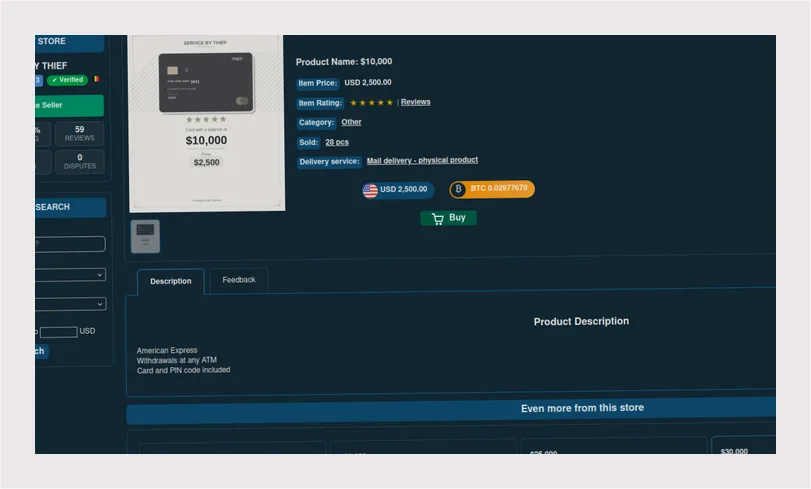
Mark T. was 34 years old and resided in Tampa Bay, Florida. A 34-year-old man from Tampa Bay, Florida, believed he had discovered a profitable opportunity in November 2024 after spending $480 on six counterfeit debit cards that held critical PIN codes obtained from a darknet marketplace. Stolen data from genuine bank accounts was contained in these cards, reflecting a typical method utilized in the carding industry.
Initially, a withdrawal of $4,200 occurred from the first three ATMs he accessed. However, his luck changed at the fourth ATM, abruptly ending his operations. This event demonstrates how quickly someone can be apprehended, often within just 72 hours. It highlights the effectiveness of ATM surveillance and how digital evidence can lead to serious legal consequences, possibly including a 5-year prison term.
Understanding the Carding Process: A Classic Scheme
How do these schemes operate? Carding is a common form of cybercrime. Mark's method adheres to a familiar pattern:
Data Acquisition: Criminals collect magnetic card information, specifically track 1 and track 2 data. This occurs through various means such as utilizing specialized tools for detecting skimmers on ATMs, employing shimmer devices in card readers, engaging in phishing activities, or buying data dumps from darknet markets. It is essential for users to understand how to spot card skimmers to protect their financial information.
Card Production: Blank plastic cards that mimic genuine ones are produced by encoding stolen data, which consists of embossed names, expiration dates, and card numbers.
When a Personal Identification Number (PIN) is captured—typically through a fake keypad or hidden camera at an ATM—criminals gain the ability to withdraw cash. This highlights the importance of being aware of protective strategies against skimming.
Cash Withdrawal: The fraudster withdraws cash from an ATM before the actual cardholder realizes the theft and can deactivate their card. This phase illustrates how digital crime can produce immediate physical consequences, introducing new risks.
The conversion of cash into cryptocurrency frequently occurs via Bitcoin ATMs or peer-to-peer platforms, making it challenging to trace the funds' origins.
Mark obtained his cards from an undisclosed darknet marketplace. He chose Monero, a cryptocurrency noted for its privacy features and the difficulty of tracing it. The cards were delivered in unmarked packaging, adding an element of authenticity to the operation. A critical point often overlooked by participants in this scheme is that ATMs are not just cash dispensing machines; they are advanced devices capable of collecting evidence. Recognizing a card skimmer is a vital step in enhancing personal security.
The Unseen Vulnerability: ATM Surveillance
Surveillance capabilities in ATMs are frequently overlooked. While engaging in illicit activities online may seem secure, cash withdrawal locations like ATMs are critical areas where anonymity is significantly compromised. These machines possess advanced surveillance features that go far beyond merely dispensing cash. The following are common attributes of ATMs:
Built-in Camera: Most ATMs are equipped with a camera aimed at capturing the user’s facial features. These units typically record at a resolution of 1080 and may include infrared technology for effective nighttime recording. This feature is vital for assessing potential skimming devices, as the camera serves as a standard safety measure.
Secondary Camera: Some ATM models have an additional camera that is designed to be less noticeable. This hidden camera is often positioned out of public sight, increasing the effectiveness of surveillance.
Transaction Record: Each transaction is thoroughly logged, providing information such as the time, amount withdrawn, card number used, ATM ID, and the status of the transaction.
Geolocation Capability: ATMs can pinpoint and relay their exact geographical locations, which are recorded by the banking institution.
Connection Log: Digital logs carefully document every engagement, ensuring comprehensive tracking of connection data.
The fourth ATM in a Tampa suburb recorded Mark T.'s face without any disguise — no glasses, no hat, no mask — as he withdrew $700. After withdrawing $700, he took his card and left. This 23-second video clip became crucial evidence regarding his actions. Such footage can provide significant insights and may even capture images of any skimming devices or how the individual interacted with the ATM. Criminals often mistakenly assume that the anonymity linked with the darknet applies equally to real-world situations. However, an ATM represents a concrete point where digital misconduct becomes apparent, resulting in a loss of anonymity. This emphasizes the importance for consumers to protect themselves against card skimming.
Mark's situation highlights the efficiency of contemporary ATM surveillance, as his actions were indisputably recorded, assisting law enforcement in crafting a solid case against him. The effectiveness of ATM security measures serves as a reminder of how swiftly illicit actions can be uncovered and addressed.
The Investigation Unfolds: A Detailed Timeline
How quickly can an investigation transition from identifying suspicious ATM withdrawals to making an arrest? The case involving Mark demonstrates an efficient and timely response:
Unauthorized withdrawals were reported on Day 1 – November 2024 from individuals in Florida, Georgia, and North Carolina. Prompt action was taken by their banks to freeze the compromised cards and initiate a fraud alert.
A concerning pattern was identified by the bank's fraud detection systems on Day 3, which involved rapid withdrawals from cloned cards occurring across various states. Rapid withdrawals from cloned cards were occurring across several states, prompting an emergency alert and the start of an internal investigation by bank officials.
Day 5: The U.S. Secret Service (USSS), which focuses on financial crime investigations, took over the case. Transaction records and video footage related to the case were requested by an analyst from the ATMs.
On Day 8, investigators identified Mark T. through the driver's license records of the Florida Department of Public Safety after comparing them with a clear image of a suspect captured in ATM footage, despite his lack of previous criminal record. It was revealed by the investigation that a 40-mile radius surrounding his residence encompassed all the transactions.
On the 12th day, authorities secured a warrant to investigate Mark's digital footprint, which encompassed an examination of his browsing history and ISP records. During the timeframe of the fraudulent transactions, access to Tor exit nodes was indicated by the ISP data. Through a court order targeting the cryptocurrency exchange where Monero was purchased, authorities established a connection between Mark and his darknet marketplace account.
A search warrant was executed by authorities at Mark's residence on Day 14. A laptop showing his online activities, packaging materials, $3,200 in cash, and a magnetic stripe reader/writer along with six blank plastic cards were found by law enforcement at Mark's home. This significant evidence strengthened the case against him, showcasing the effectiveness of modern fraud detection measures.
Day 15: Mark was arrested. In custody, he admitted to using four of the six cards for cash withdrawals. The last two cards had been deactivated by the bank before he had the opportunity to use them. The case emphasizes the need for victims to report quickly and highlights protective measures essential against credit card fraud.
The Final Reckoning: Numbers and Consequences
The legal aftermath of Mark's illicit financial exploits offers a stark reminder that participation in such schemes can lead to severe penalties, regardless of how minor one's role might seem. The figures speak for themselves, painting a clear picture of the consequences:
| Item of Interest | Numerical Value |
|---|---|
| Number of cashouts | 4 |
| The total amount withdrawn was $4,900. | |
| For the cards, $480 was the amount that was paid. | |
| The duration from withdrawal to arrest was 15 days. | |
| A sentence of 60 months (5 years) was given in a federal prison. | |
| An amount of $22,000 was imposed as both restitution and a fine. | |
| Supervised release lasts for a period of 3 years. |
These figures reveal the risks associated with engaging in discussions on cloned cards reddit or carding forums dark web, highlighting the substantial personal and financial distress that can result. The quick arrest—just 15 days post-withdrawals—highlights the effectiveness of modern anti-fraud efforts and collaboration among law enforcement agencies. A 5-year federal prison sentence, along with hefty fines and restitution, poses a serious caution regarding the dangers of such behavior. Furthermore, the requirement for supervised release indicates that the consequences persist beyond incarceration, as one's liberties remain restricted even after serving time. With enhanced card skimming protection and increased awareness of the dangers linked to cf card cloning, this entire situation might have been avoided.
Why Cryptocurrency Did Not Guarantee Anonymity
Many people mistakenly believe that cryptocurrencies, especially privacy-centric ones like Monero, ensure complete anonymity. Mark, who trusted this belief, opted for Monero to finance his card purchases. However, the investigation successfully traced these transactions, exposing the flaws in this idea of anonymity.
Acquisition of Monero: Mark obtained Monero via a centralized exchange, which mandated identity verification. He provided a photograph along with personal identification. After a court order, the exchange disclosed both his identity and transaction details to the authorities. While it is challenging to trace later Monero transactions, the timing and amount of his initial purchase proved to be critical evidence. This scenario emphasizes that the first step in obtaining funds can reveal substantial vulnerabilities, even when following card skimming reddit guidance.
Sequence of Events: The timeline — from Mark's Monero acquisition to purchasing cards from an online platform and withdrawing cash — transpired over a period of two weeks. Although circumstantial, the exact order of these actions offered compelling proof linking Mark to his illegal activities.
Tangible Evidence: Authorities discovered blank cards with magnetic strips in his residence, which corresponded to stolen data from victims. This evidence was undeniable physical proof that crypto anonymity could not hide. The presence of these items, alongside credit card skimmer protector devices, reinforced his predicament.
Video Evidence: An ATM camera captured a clear image of Mark, serving as undeniable evidence. Even if all other digital and physical traces had been erased, this footage would have irrevocably connected him to the crime scene. It highlights the necessity of being vigilant about one’s surroundings and using card skimming protector devices if tampering is suspected.
Mark's Critical Mistakes: Lessons in Security
Mark's experience illustrates common pitfalls encountered during carding operations. Such mistakes not only led to his arrest but also reveal significant flaws in security measures:
Concentration of Withdrawal Locations: Fraud detection systems activated immediate alerts following the occurrence of all four cash withdrawals within 40 miles of his home.
The identity of Mark was not concealed at the ATMs. In the surveillance footage, law enforcement was able to identify him by utilizing tools from the Department of Public Safety (DPS) that cross-reference images with driver's license databases, since his face was clearly visible. This error greatly diminished any chances of remaining anonymous.
Using a KYC-Compliant Cryptocurrency Exchange: By acquiring Monero from a compliant exchange, Mark inadvertently linked his true identity to the cryptocurrency utilized later in dark web activities. This was a considerable error regarding the preservation of anonymity.
During the investigation, law enforcement discovered items such as a magnetic stripe reader, a laptop showing signs of use related to the dark web, and cloned cards at his residence. This assortment of evidence was significant in both physical and digital contexts. Deleted files can often be recovered, as operating system logs may reveal usage patterns. This example highlights how law enforcement can effectively use a credit card skimming device detector.
Cash Found at His Residence: The search resulted in the recovery of $3,200 in cash, which matched the amounts withdrawn from the ATMs. While this might appear minor, it further supported the claims against him.
Quick Withdrawal Activity: All transactions took place within a two-week period. If these had been spread out over several months, fraud detection systems might not have flagged them as swiftly. Nonetheless, ATM cameras would likely have captured his identity eventually. This case underlines the necessity for robust credit card skimming protection and the importance of prompt responses from financial institutions.
Lessons for Security Professionals
Mark T.'s case highlights the crucial need for robust security protocols in both financial sectors and law enforcement, areas often underestimated by those engaging in illicit activities. This scenario provides valuable lessons for professionals in cybersecurity.
First and foremost, the anti-fraud mechanisms implemented by financial institutions serve as a critical barrier, yet they are frequently neglected. These systems rely on automated assessments of user actions, geographical information, and scoring algorithms to detect unusual behavior without the need for constant human intervention. Ongoing investment in advancements in machine learning is vital for financial organizations to effectively identify anomalies.
In addition, the effective combination of physical and digital forensic techniques proves highly advantageous. For instance, video footage captured by ATMs, which serves as crucial evidence, would lose its significance without the precise digital records that indicate specific timestamps for reviewing particular frames. The successful integration of both types of evidence is essential for thorough investigations.
Furthermore, the misconception that cryptocurrencies guarantee total anonymity is commonly overstated. The points of entry and exit related to cryptocurrencies—especially exchanges requiring user identification—create traceable links between virtual activities and real-world transactions. With the implementation of Know Your Customer (KYC) regulations, achieving true anonymity becomes quite challenging.
Mark T. confessed in March 2025 to participating in fraud and money laundering, as outlined in 18 U.S.C. § 1029 and 18 U.S.C. § 1957. After being sentenced to a 60-month term in federal prison, he is required to pay a $22,000 fine, provide restitution to the victims, and will be under supervised release for three years. The judge perceived Mark primarily as a buyer and the final link in the criminal network, rather than the mastermind behind it. However, it is often this final link that faces the most immediate repercussions, while higher-ranking members of the criminal enterprise frequently evade accountability, which poses a persistent challenge for law enforcement.